
/ GHG emissions intensity per million euros of Net Revenue
| 2019 | 2020 | 2021 | 2022 | 2023 | 2024 | 2025 | |
|---|---|---|---|---|---|---|---|
| Net Revenue m€ | Net Revenue m€ 2019 9,800 |
Net Revenue m€ 2020 9,712 |
Net Revenue m€ 2021 10,487 |
Net Revenue m€ 2022 12,572 |
Net Revenue m€ 2023 13,099 |
Net Revenue m€ 2024 13,965 |
Net Revenue m€ 2025 14,547 |
| Net Revenue Variation (n/n-1)% | Net Revenue Variation (n/n-1)% 2019
|
Net Revenue Variation (n/n-1)% 2020 -1% |
Net Revenue Variation (n/n-1)% 2021 8% |
Net Revenue Variation (n/n-1)% 2022 20% |
Net Revenue Variation (n/n-1)% 2023 4% |
Net Revenue Variation (n/n-1)% 2024 7% |
Net Revenue Variation (n/n-1)% 2025 4% |
| Headcount | Headcount 2019 83,235 |
Headcount 2020 79,051 |
Headcount 2021 88,531 |
Headcount 2022 98,022 |
Headcount 2023 103,295 |
Headcount 2024 104,328 |
Headcount 2025 114,079 |
| Headcount Variation (n/n-1)% | Headcount Variation (n/n-1)% 2019
|
Headcount Variation (n/n-1)% 2020 -5% |
Headcount Variation (n/n-1)% 2021 12% |
Headcount Variation (n/n-1)% 2022 11% |
Headcount Variation (n/n-1)% 2023 5% |
Headcount Variation (n/n-1)% 2024 1% |
Headcount Variation (n/n-1)% 2025 1% |
| GHG Emissions TeqCO2 | GHG Emissions TeqCO2 2019 316,149 |
GHG Emissions TeqCO2 2020 188,299 |
GHG Emissions TeqCO2 2021 157,083 |
GHG Emissions TeqCO2 2022 216,431 |
GHG Emissions TeqCO2 2023 222,399 |
GHG Emissions TeqCO2 2024 287,078 |
GHG Emissions TeqCO2 2025 281,044 |
| GHG Emissions Variation (n/n-1) % | GHG Emissions Variation (n/n-1) %2019
|
GHG Emissions Variation (n/n-1) %2020 -40% |
GHG Emissions Variation (n/n-1) %2021 -17% |
GHG Emissions Variation (n/n-1) %2022 38% |
GHG Emissions Variation (n/n-1) %2023 3% |
GHG Emissions Variation (n/n-1) %2024 29% |
GHG Emissions Variation (n/n-1) %2025 -2% |
| Variation from 2019 | Variation from 2019 2019
|
Variation from 2019 2020 -40% |
Variation from 2019 2021 -50% |
Variation from 2019 2022 -32% |
Variation from 2019 2023 -30% |
Variation from 2019 2024 -9% |
Variation from 2019 2025 -11% |
| Emissions intensity (TeqCO2/M€) | Emissions intensity (TeqCO2/M€) 2019 32.26 |
Emissions intensity (TeqCO2/M€) 2020 19.39 |
Emissions intensity (TeqCO2/M€) 2021 14.98 |
Emissions intensity (TeqCO2/M€) 2022 17.22 |
Emissions intensity (TeqCO2/M€) 2023 16.98 |
Emissions intensity (TeqCO2/M€) 2024 20.56 |
Emissions intensity (TeqCO2/M€) 2025 19.32 |
| Intensity Variation (n/n-1) % | Intensity Variation (n/n-1) % 2019
|
Intensity Variation (n/n-1) % 2020 -40% |
Intensity Variation (n/n-1) % 2021 -23% |
Intensity Variation (n/n-1) % 2022 15% |
Intensity Variation (n/n-1) % 2023 -1% |
Intensity Variation (n/n-1) % 2024 21% |
Intensity Variation (n/n-1) % 2025 -6% |
/ Decarbonization targets and levers of the Transition plan
| Description | Reference year 2019 | Target 2030 | Target 2040 | |
|---|---|---|---|---|
| GHG emissions (TeqCO2) | GHG emissions (TeqCO 2) Description The strong growth in activities since 2019 automatically leads to an increase in GHG emissions in absolute value. The objective is to keep GHG emissions per capita contained |
GHG emissions (TeqCO 2) Reference year 2019 304,177 |
GHG emissions (TeqCO 2) Target 2030 29,176 |
GHG emissions (TeqCO 2) Target 2040
|
| Scope 1 direct emissions | Scope 1 direct emissions Description Reinforcement of energy efficiency actions undertaken in the various offices |
Scope 1 direct emissions Reference year 2019
|
Scope 1 direct emissions Target 2030 (5,892) |
Scope 1 direct emissions Target 2040 (9,760) |
| Energy consumed | Energy consumed Description Transition to 100% renewable energy from direct sources, now via the implementation of long-term "High impact REC" contracts |
Energy consumed Reference year 2019
|
Energy consumed Target 2030 (45,343) |
Energy consumed Target 2040 (65,103) |
| Strengthening the energy efficiency of offices | Strengthening the energy efficiency of offices Description Switching to 100% renewable energy, with energy efficiency actions undertaken in the various offices |
Strengthening the energy efficiency of offices Reference year 2019
|
Strengthening the energy efficiency of offices Target 2030 (5,191) |
Strengthening the energy efficiency of offices Target 2040 (10,442) |
| Decarbonization of the supply chain (Tier 1 suppliers) | Decarbonization of the supply chain (Tier 1 suppliers) Description
|
Decarbonization of the supply chain (Tier 1 suppliers) Reference year 2019
|
Decarbonization of the supply chain (Tier 1 suppliers) Target 2030 (50,579) |
Decarbonization of the supply chain (Tier 1 suppliers) Target 2040 (90,498) |
| Reduce business travel by air | Reduce business travel by air Description
|
Reduce business travel by air Reference year 2019
|
Reduce business travel by air Target 2030 (42,870) |
Reduce business travel by air Target 2040 (71,008) |
| Limiting commuting-related impacts | Limiting commuting-relatedimpacts Description The use of public transport is facilitated by (total or partial) coverage of costs, just as employees can have access to soft mobility thanks to incentive mechanisms. |
Limiting commuting-relatedimpacts Reference year 2019
|
Limiting commuting-relatedimpacts Target 2030 (32,073) |
Limiting commuting-relatedimpacts Target 2040 (53,124) |
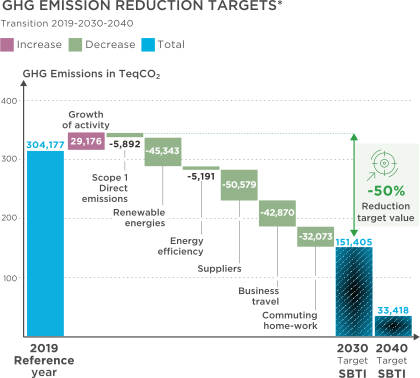
This waterfall chart presents the greenhouse gas (GHG) emission reduction targets for the 2019–2030–2040 transition, expressed in tCO2e.
Reference year 2019: 304,177 tCO2e.
Changes by lever (successive increases and decreases).
Business growth: +29,176.
Scope 1 Direct Emissions: -5,892.
Renewable Energy: -45,343.
Energy Efficiency: -5,191.
Suppliers: -50,579.
Business Travel: -42,870.
Commuting: -32,073.
SBTi target 2030: 151,405 tCO2e, representing a -50% reduction compared to the reference year.
SBTi target 2040: 33,418 tCO2e.