
4.1 General information
4.1.2 CSR reporting methodology and process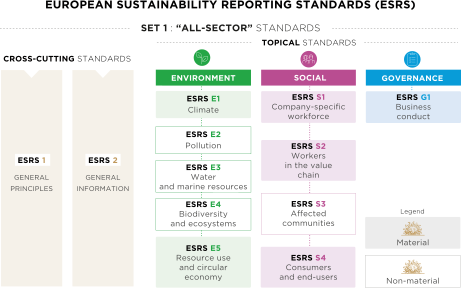
This diagram presents the European Sustainability Reporting Standards (ESRS), organized under the Set 1 "cross-sector" standards, divided into two categories: cross-cutting standards and topical standards.
Cross-cutting standards.
ESRS 1: General Principles.
ESRS 2: General Disclosures.
Topical standards — Environment.
ESRS E1: Climate.
ESRS E2: Pollution.
ESRS E3: Water and Marine Resources.
ESRS E4: Biodiversity and Ecosystems.
ESRS E5: Resource Use and Circular Economy.
Topical standards — Social.
ESRS S1: Own Workforce.
ESRS S2: Workers in the Value Chain.
ESRS S3: Affected Communities.
4.1.2 CSR reporting methodology and process
Reporting organization
The Groupe CSR Department manages an internal CSR Steering Committee, bringing together the Groupe’s main corporate functions (Legal and Compliance, Finance, HR Operations, Financial Monitoring Controls, Procurement, Risk Management, etc.), which covers all key areas included in the sustainability report.
The CSR Department is also supported by external firms such as EcoAct and Carbone 4 on environmental issues and Bureau Veritas on issues of measurement and methodology related to greenhouse gas emissions.
For social issues, the Groupe carried out a major social audit in 2023 with the help of WTW, and works occasionally with other firms. The CSR Department works in project mode with various local teams responsible for client projects worldwide. It uses a dual approach: “push” to help implement internal initiatives and progress certain issues, and “pull” by fully driving the sustainability report.
The framework for sustainability reporting in the CSRD and ESRS format is described in an ad hoc document, the CSR Reporting Comprehensive Guide, updated regularly throughout the year and shared with all contributors. It includes:
- the definition of all material quantitative and qualitative metrics collected at entity level, it also has the ESRS heading and an explanation allowing everyone in their local context to understand it. Calculation rules and focal points are indicated; it is the same for the organization of data checks, with the roles and responsibilities of each person from the relevant position in the entity to the Groupe CSR Department for the final check before consolidation;
- a description of the tools and systems used for data collection, and the link to existing sources and documents. Whether it concerns their governance, user rights or documents available for new contributors, all this structuring information is available directly with updates;
- referral of metrics to Janus Groupe policies, the Code of Conduct and Ethics, and more local policies where applicable;
- referral to the various internal communication channels dedicated to sustainability reporting, active throughout the year to inform and mobilize, and to train and prepare ahead of each reporting cycle.
The 2025 CSR Reporting Comprehensive Guide was developed by the Groupe CSR Department with the support of a cross-functional project group of around 100 people. It was shared with +1,000 contributors, with several online sessions, particularly in the second half of the year, to prepare for the hard close of the third quarter, then for the preparation of the fourth quarter. This community met every week, answering various internal questions as they arose.
The CSR Reporting Comprehensive Guide includes seven sections in order to cover all the areas expected by the regulator and meet the expectations of contributors, with a view to continuous improvement.